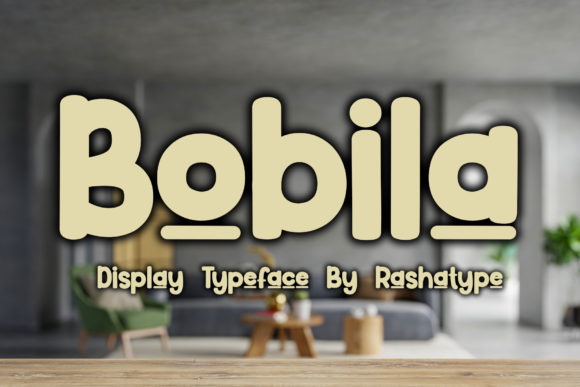
Bobila Display Font for Modern Web Design
Bobila is a cool and casual display font built for digital clarity and expressive impact — not just print posters or flyers. As a web designer who ships landing pages, SaaS dashboards, and conversion-optimized online stores, I reach for Bobila when I need a typeface that instantly signals approachability without sacrificing polish. Its relaxed yet intentional letterforms hold up beautifully across devices, from mobile hero headers to desktop banner graphics — making it one of the most versatile display fonts for digital-first creators.
Bobila for Hero Sections and Landing Page Headlines
Bobila shines brightest where attention is scarce: above-the-fold headlines on high-conversion landing pages. Its open counters and subtle bounce give it strong legibility at large sizes, even on 1080p monitors and retina displays. Unlike overly decorative display fonts, Bobila avoids visual noise — so your value proposition stays readable, scannable, and emotionally resonant. Pair it with a clean sans serif like Inter or Manrope for body copy, and you’ve got instant hierarchy: Bobila commands attention, while your supporting text delivers clarity. Use it for headline variations like “Start Your Free Trial” or “Join 5,000+ Designers” — short, action-oriented, and human-sounding.
Bobila for Online Store Banners and Product Launch Graphics
When launching a new collection on your Shopify store or promoting a limited-time offer in an email banner, Bobila adds warmth and intentionality without feeling corporate or cold. It’s especially effective on lifestyle product banners — think artisanal goods, wellness brands, or indie fashion labels — where tone matters as much as typography. On light backgrounds, use Bobila at 48–64px with generous letter-spacing (0.03em) for rhythm; on dark overlays, boost contrast with a subtle white stroke or soft drop shadow. Because Bobila is designed as a display font, avoid using it below 28px — reserve smaller sizes for your body or caption fonts.
Bobila for Creative Portfolio Websites and Brand Kit Assets
If you’re a UI designer, illustrator, or creative entrepreneur building a personal portfolio site or brand kit, Bobila reinforces authenticity and craft. It works exceptionally well for section titles (“Work,” “Process,” “Clients”), logo lockups (when used sparingly in wordmarks), and branded content cards. Its casual energy helps soften technical or data-heavy projects — say, a fintech dashboard case study — by adding visual warmth. For consistency, apply Bobila only to top-level headings and accent elements, then pair with a neutral sans serif (like Poppins or Lato) for project descriptions and contact forms. This keeps your digital identity cohesive, professional, and quietly confident.
Bobila for Blog Headers and Editorial Social Graphics
Blog headers, newsletter subject lines, and Instagram carousel titles demand personality *and* precision — and Bobila delivers both. Its balanced x-height and friendly proportions make it highly legible in thumbnail-sized previews and mobile feeds. When designing blog graphics for platforms like Pinterest or LinkedIn, use Bobila for main titles only — never for body text or captions. Export as SVG or embed via @font-face with WOFF2 support to ensure crisp rendering across browsers. Bonus tip: if your blog uses a serif body font (e.g., Merriweather or Playfair Display), Bobila creates an elegant contrast — modern meets timeless — ideal for design-forward publications or coaching blogs.
Bobila for Mobile-First Call-to-Action Buttons and App Screens
Yes — Bobila can work in buttons, but *only* when sized appropriately and paired thoughtfully. On mobile app screens or progressive web apps, use Bobila at 20–24px inside primary CTAs (“Get Started,” “Download Now”) against solid-color backgrounds. Avoid gradients or busy textures behind it; let the font breathe. Test contrast ratios rigorously: Bobila on #2563EB (indigo) passes WCAG AA at size 20px+ with bold weight. For accessibility, always ensure fallback fonts are declared in your CSS stack — and never rely solely on Bobila for functional interface text like form labels or error messages.
Bobila for Wedding Invitations and Elegant Branding
Though rooted in digital workflows, Bobila’s charm extends naturally into elevated print-adjacent contexts — especially for wedding websites, boutique hospitality brands, or luxury service landing pages. Its casual elegance bridges formal and friendly, making it perfect for phrases like “Celebrate With Us” or “Book Your Experience.” In these cases, pair Bobila with a delicate serif (such as Cormorant Garamond) for ceremony details or pricing tiers — letting Bobila anchor the emotional tone while supporting fonts handle information density. Just confirm your license includes web embedding and commercial use for client-facing sites and digital templates.
Bobila Font Pairing Strategies for Digital Design Systems
Bobila thrives when contrasted — not matched. As a display font, it’s not meant to blend in. Try these proven pairings: For SaaS products: Bobila + Inter (light/regular weights for UI text). For creative agencies: Bobila + Space Grotesk (for a bold, contemporary system). For editorial blogs: Bobila + EB Garamond (serif for depth, display for voice). Always test line height, tracking, and weight balance — Bobila’s medium weight often pairs best with regular or semibold body fonts to avoid visual competition. And remember: fewer weights mean stronger impact. If Bobila includes alternates or stylistic sets, use them selectively — like a single swash capital for logo treatment — not across full navigation menus.
Bobila Licensing for Websites, Client Projects, and Digital Templates
Before deploying Bobila on a live site or selling it within a Figma template, verify your license covers webfont hosting, commercial redistribution, and client deliverables. Most premium display fonts — including Bobila — require a separate web license for self-hosted @font-face use or third-party services like Google Fonts (if available). For agency designers: ensure your license permits use across unlimited client projects. For online store owners: confirm it supports Shopify, WooCommerce, and custom-coded themes. A properly licensed Bobila isn’t just a design choice — it’s a trust signal, a legal safeguard, and a mark of professional integrity.